
Lincoln
617.228.4400
Boston
617.228.4400
Smith Duggan was proud to file an amicus brief in support of Respondents on behalf of the Charitable Irish Society of Boston. CIS is the oldest Irish society in the Americas and has long stood for equality for all people, including immigrants, under law. That principle is exactly what is being attacked by the current Administration in Executive Order 14160, despite the plain language and clear legislative history of the Amendment supporting the Court’s decision in United States v. Wong Kim Ark, 169 U.S. 649 (1898) and every single decision since then for over a century. “All persons born in the United States” means “all persons born in the United States,” at least for those who believe in textualism, originalism and a Rule of Law.
The whole purpose of the Citizenship Clause under §1 of the 14th Amendment was to make it crystal clear that all persons born in America under an American flag were citizens of America, clothed from that point with the rights and privileges of American citizenship. America had just bled through a Civil War brought on by the insistence of the slave power in a racial hierarchy. The framers and ratifiers of the 14th Amendment made it clear that America would no longer tolerate racial, class, religious or family distinctions. Henceforth there would be on this soil one class – Americans - and all people born on this soil were entitled to the same civil rights as everyone else. Parentage, race, religion, immigrant status, domicile, consent, allegiance are terms that appear nowhere in the Amendment, because the people who wrote it and voted on it did not indent them to be there.
Section one of the 14th Amendment states in clear, direct terms, “All persons born or naturalized in the United States, and subject to the jurisdiction thereof, are citizens of the United States and the State wherein they reside.” When adopted in 1868, this merely restated what had been the law since the country’s founding, and indeed of the Common Law dating back to 1608 in England. Anyone born on American soil, under and American flag was an American citizen. It is birthright citizenship, called jus soli, which had been ignored only once in America’s history in the notorious Dred Scott v. Sandford, 60 U.S. 393 (1857), where Chief Justice Roger Brooke Taney ruled that Black people could never be American citizens simply because of their race and they had no rights White people were bound to respect. That was the last significant event that made the Civil War inevitable. In essence, this Administration takes the position that Taney’s opinion in Dred Scott was correct after all. It was not.
The birthright citizenship clause in the 14th Amendment was drafted in part to expunge the stain of the odious Dred Scott holding, but that was not the only reason behind the Citizenship Clause. The drafters were determined to root out the cause of the Civil War, which they knew was a race-based society in which people’s rights depended upon the color of their skin or place or origin. Henceforth, America would live up to its creed that all people were to be equal under law from birth. There would be only one class of citizens, all vested with the same Privileges or Immunities of all other citizens.
Birthright citizenship was first challenged by the government in the late 1890s. The Government claimed that a man born in America of non-citizen Chinese parents was not an American, despite the plain language of §1 of the 14th Amendment, because his parents were of Chinese origin and could not become American citizens under the racist Naturalization Act of 1790, which limited naturalization to White people. 1. Stat. 103 (1790). The Supreme Court, in an opinion by Justice Horace Gray of Massachusetts, ruled 7-2 that Section One means what it says and says what it means. A person born in the United States is a citizen of the United States regardless of parentage. United States v. Wong Kim Ark,169 U.S. 649 (1898). That ruling has been affirmed by every court to decide the issue since, creating 125 years of unbroken precedent and standing for equality and self-government. The People make the law in America.
On January 20, 2025, the day he took office, the current President issued an Executive Order attempting to change by executive fiat what The People enshrined by Constitutional Amendment. Under the EO, the Executive, not The People, would decide who can be an American citizen. Children of undocumented immigrants, even of one parent whose visa may have expired, were not American citizens even if born in America. The EO would leave these children stateless, a condition the Supreme Court described as “the total destruction of an individual’s status in organized society.” Trop v. Dulles, 356 U.S. 86, 100 (1958).
The United States District Court for the District of New Hampshire ruled that the Administration’ s attempted EO violated both Section One of the 14th Amendment and a federal statute, 8 U.S. C. § 1401(a) passed to enforce the Constitutional mandate. Barbara v. Trump, 790 F.Supp.3d 80 (D.NH 2025). The Government appealed this decision directly to the U.S. Supreme Court, obtaining Certiorari Before Judgment. Using what can only be described, generously, as twisted logic, the Administration argues that children born to undocumented immigrants are not “subject to the jurisdiction” of the United States, a rather stunning contention in light of what Immigration and Customs Enforcement (“ICE”) is doing at the Administration’s behest to people in places like Minnesota and Chicago, and even to college students in New York and in Medford Massachusetts.
The Charitable Irish Society (“CIS”) was founded in 1737 to aid immigrants seeking a new life on this soil, and, after Independence, has worked to assist those who wish become citizens of this country governed by a rule of law not of a dictator. The Society felt compelled to add its voice to those who, like the Respondents, believe the Constitution means what it says and that the fundamental law applies evenly to everyone in America.
We filed an amicus brief for CIS in support of Respondents, and more broadly in support of the rule of law. Our brief explains that the phrase “subject to the jurisdiction thereof,” excludes only three narrowly defined groups of children born in America from American citizenship: (1) children of Indians living on tribal lands; (2) children of foreign diplomats; and (3) children of invading occupying armies. Native American tribes had treaties with the US Government, and the others had immunity from US jurisdiction under international law. Therefore, children born to these parents were not “subject to US jurisdiction.” But birth citizenship and its promise of equal protection under law applies to everyone else born in this land. The legislative history is crystal clear on that point. It has nothing to do with the immigration status of documented or undocumented immigrants whatsoever.
Our brief centers on a debate in the Senate in 1866 between California Senator John Conness, an Irish immigrant from Abbey, Galway, who supported the birthright citizenship clause and Senator Edgar Cowan from Pennsylvania, a states-rights Democrat, who opposed it. Cowan feared that his State would be overrun by dark skinned “Gypsies” and warned that California would be overrun by yellow-skinned “Mongolians” if Section One were adopted.
Conness responded that all children born on this land were entitled to the same treatment under law as everyone else. Bigotry and class status was no longer to be tolerated. Despite Cowan’s fears, Section One was adopted by 2/3rds of each house and 3/4ths of the voting states and become part of our fundamental law.
The debate between Conness and Cowan proves beyond doubt that everyone understood what Section One would mean if adopted: all children, even those born of the most detested and feared immigrant parents, would be American citizens if born on American soil. If the Court considers the Original Intent of the drafters of Section One or Original Understanding of those who voted on it, the Conness – Cowan debate proves conclusively that Section One means birthright citizenship for all born on this land under this flag.
The case will be argued in the Supreme Court on April 1, and our counsel intends to be present for the argument.
John Conness’s story has a Boston twist. Conness was forced out of the Senate in 1869 because of his support for Chinese immigrants and for birthright citizenship under the 14th Amendment. He left California in 1869 and moved to Dorchester, where he lived with his second wife, Mary Russell Davis, and their children until he died in Jamaica Plain in 1909. His house on River Street is now owned by the City of Boston.
Smith Duggan Cornell & Gollub LLP is pleased to announce that the following attorneys have been recognized in the latest edition of Super Lawyers®, which honors outstanding lawyers based on peer reviews and professional achievement. No more than 5% of Massachusetts attorneys are recognized by Super Lawyers®.
For the 20th consecutive year, Christopher A, Duggan was acknowledged for excellence in product liability defense. For the 21st consecutive year, Peter M. Durney was also chosen for his achievements in product liability defense. Additionally, Patricia A. Hartnett was selected for her accomplishments in product liability defense.
Paul Alan Rufo was included for his skill in real estate law. Matthew J. Walko was recognized for excellence in civil litigation — defense, while Dana A. Zakarian was selected for his accomplishments in the field of business litigation.
Super Lawyers® also honored three Smith Duggan Cornell & Gollub LLP attorneys as Rising Stars. These lawyers are 40 or younger or have been in practice for 10 years or fewer. No more than 2.5% of eligible attorneys in any given state are selected.
James B. Claybourne IV was chosen for his skill in business litigation. Christopher J. Hurst and Steven D. Procopio were also named Rising Stars for their professional excellence in product liability defense.
The selection process for Super Lawyers® is a rigorous one, involving independent research, peer nominations, and peer evaluations. This thorough procedure ensures that only the most deserving attorneys are recognized. The process for identifying Rising Stars follows the same stringent regimen.
Super Lawyers® is part of Thomson Reuters, the world’s leading provider of news and information with a particular focus on legal, regulatory, and tax changes.
Super Lawyers® is designed to create a credible, comprehensive, and diverse listing of outstanding attorneys that can be used as a resource for attorneys and consumers searching for legal counsel.
Congratulations, one and all!
Barbara Hayes Buell has been honored as one of Massachusetts Lawyers Weekly's "Go To Lawyers" in the field of professional malpractice defense.
The Smith Duggan Cornell & Gollub LLP partner earned this distinction for her expertise and impressive record of success, while demonstrating an ability to think creatively and explore all options for her clients. Due to her outstanding reputation in this area, she often receives referrals from other attorneys.
The publication recognized only a dozen of the top lawyers across the Commonwealth specializing in professional malpractice. These attorneys were nominated by their peers and chosen by a panel at Massachusetts Lawyers Weekly.
Congratulations, Barbara! Her compelling profile, which appeared in Massachusetts Lawyers Weekly, is available here.
Renowned constitutional scholar Akhil Reed Amar, Sterling Professor of Law and Political Science at Yale University, discussed his latest book, “Born Equal. Tracing the transformative period from 1840 to 1920.”
The September 11th program was sponsored by the Concord Museum as part of its monthly speaker series. Professor Amar appeared in conversation with Smith Duggan founding partner, Chris Duggan, who is on the Museum’s Board of Directors and a member of the Events Committee.
Professor Amar discussed how the continuing American constitutional conversation in the 19th and early 20th centuries, spurred by the Civil War, led to guarantee of birth equality and birthright citizenship and reshaped the U.S. Constitution through four landmark amendments, the 13th, 14th, 15th and 19th. From the abolition of slavery to the expansion of suffrage, he illuminated the fierce debates and visionary leaders – Frederick Douglass, Harriet Beecher Stowe, and Abraham Lincoln and more – who redefined American democracy. These people and events form the core of his new book, Born Equal, the second in Professor Amar’s planned trilogy on American constitutional history.
In addition to being a noted trial and appellate lawyer, Chris Duggan serves as a governor of the Concord Museum, an advisor to Revolutionary Spaces in Boston and sits on the Board of Directors of the Charitable Irish Society, the oldest Irish organization in the Americas. He is a frequent lecturer for the National Constitution Center, a resident member of the Colonial Society of Massachusetts and the founder of the James Otis Lecture Series, program for high school students in which leading scholars and practitioners teach aspects of American law, legal history and biography.
A video of the entire program at the Concord Museum is available here.
A Superior Court judge ordered a rare mistrial in a civil case after defense counsel twice raised criminal matters concerning the corporate plaintiff’s owner during the questioning of witnesses.
Judge Adam Hornstone declared the mistrial in Tufts Construction Inc. v. City of Malden on Aug. 6. Tufts Construction is seeking damages in excess of $10 million on claims stemming from the city’s alleged failure to pay for work performed by the plaintiff.
Smith Duggan Cornell & Gollub founding partner Christopher A. Duggan was interviewed by Massachusetts Lawyers Weekly about the case. He secured a defense victory in what the publication called the “2021 landmark Supreme Judicial Court decision” in Fitzpatrick v. Wendy’s Old-Fashioned Hamburgers of New York.
That decision held that trial judges must rule on motions for mistrial “when made,” and that the standard for granting a new trial governs should the judge wait to decide whether to retry a case until after the jury returns its verdict.
Christopher Duggan said that, in his experience, mistrials in civil cases are “extremely” rare. “One reason is that the standard that you have to meet is really high,” he said. “[You need to show] something happened that is so egregious as to impact the substantial rights of the parties and the likelihood of a just verdict.”
He added that the result was not surprising given that the issue of whether Tufts’ prior criminal convictions would come into evidence had been raised twice before trial.
“I suspect the court was pretty frustrated when the issue came up,” he stated. “Anytime such a sensitive issue is going to be raised on either direct or cross-examination, counsel needs to think long and hard about how to do that and whether it would be a good idea to request a sidebar and give the judge a head’s up.”
He concluded by noting that there are also practical considerations weighing on a court when deciding to grant a mistrial in a civil case. “It takes a lot to take get a case to trial,” he said. “It’s a big investment of time on the part of the lawyers, parties, court and jurors. All of that is wasted if you have a mistrial.”
Read his comments in the Massachusetts Lawyers Weekly article. It is available here.
Best Lawyers®, the highly regarded peer-review guide for the legal profession, has just released the current edition of The Best Lawyers in America®.
Multiple Smith Duggan Cornell & Gollub partners were included in these prestigious rankings, highlighting only the top six percent of private practicing attorneys in the United States.
Barbara Hayes Buell was chosen for her success in defending medical malpractice cases, and Gerard A. Butler, Jr. was featured for his record of achievement in commercial litigation and insurance litigation.
For the thirteenth consecutive year, founding partner Christopher A. Duggan was recognized for his professional excellence in three critical areas of trial practice: commercial litigation, insurance litigation, and product liability litigation defense. Peter M. Durney was also chosen for his achievements in product liability litigation defense.
Robert C. Mueller was named for his success in commercial litigation. Paul Alan Rufo was included for his skill in real estate law. Andrew P. Stempler was selected for his expertise in real estate law for the tenth consecutive year while Matthew J. Walko was included for his professional excellence in insurance law.
The Best Lawyers in America® accolades are based purely on the review of other leading attorneys practicing in the same metropolitan and practice areas.
Moreover, Steven D. Procopio was recognized in the current edition of Best Lawyers: Ones to Watch in America for his accomplishments in commercial litigation, personal injury litigation defense and product liability litigation defense.
Best Lawyers: Ones to Watch features the most elite, up-and-coming attorneys in the profession and employs the same methodology that has made Best Lawyers® the gold standard for legal rankings.
The Best Lawyers in America® plays a pivotal role in aiding sophisticated purchasers of legal services to obtain the top legal talent.
Congratulations, one and all!
Nicole B. Cordeiro has been named a "Go-To Lawyer for Family Law" by Massachusetts Lawyers Weekly, a recognition highlighting the leading attorneys in the Commonwealth.
She earned this distinction for her expertise and record of success, while demonstrating an ability to think creatively and explore all options for her clients.
Due to her outstanding reputation in the field of domestic relations, she frequently receives referrals from other lawyers.
With 18 years of experience, Nicole specializes in dealing with Department of Children and Families investigations, restraining orders, and criminal matters that are often linked to divorce and custody issues.
She is also a member of the Association of Family and Conciliation Courts, dedicated to resolving family conflicts.
Congratulations, Nicole! Her compelling profile from Massachusetts Lawyers Weekly is available here.
Smith Duggan Cornell & Gollub LLP is pleased to announce that founding partner Christopher A. Duggan has been selected among the top 45 litigators in the Commonwealth by Chambers USA, the most definitive guide for sophisticated purchasers of legal services.
Chris was recognized in the field of Litigation: General Commercial, which underscores so many of his core practice areas. Only 2% of lawyers in the United States receive Chambers rankings.
Chambers and Partners reviewed his numerous achievements and precedent-setting cases. During the most thorough, independent and comprehensive research process of any legal directory, client feedback was also elicited. Here are some representative comments.
“He is thorough and A++ on his deliverables."
"He's a smart, practical and excellent trial attorney."
"His ability to grasp the law of whatever state he works in stands out.”
Chris is also primarily responsible for Smith Duggan Cornell & Gollub’s exceptional standing this year in Chambers USA.
Smith Duggan Cornell & Gollub was included among the top 30 law firms in the Commonwealthin the field of Litigation: Commercial General, while only 0.5% of law firms across the United States are ranked by Chambers.
Congratulations, Chris!
Chambers USA 2025 has once again recognized Smith Duggan Cornell & Gollub LLP as among the nation's foremost and most elite law firms. Chambers USA is the most definitive guide available for sophisticated purchasers of legal services.
Smith Duggan Cornell & Gollub LLP was included among the top 30 law firms in the Commonwealth, while only 0.5% of law firms across the United States were ranked by Chambers.
These impressive rankings were secured after Chambers and Partners reviewed the numerous achievements and precedent-setting cases of Christopher Duggan, as well as the accomplishments of other Smith Duggan Cornell & Gollub partners, including Peter Durney, Rodney Gould, and Dana Zakarian.
During the most thorough, independent and comprehensive research process of any legal directory, clients shared their feedback about the firm. Here are some representative comments.
"The lawyers' honesty and big picture approach have always given me trust and complete confidence in Smith Duggan Cornell & Gollub."
"Smith Duggan Cornell & Gollub has very strong partners with extensive litigation experience. They are also practical solution seekers."
"Smith Duggan Cornell & Gollub has extensive trial experience on a wide variety of substantive legal issues."
"Smith Duggan Cornell & Gollub provides excellent advice and litigation support."
Smith Duggan Cornell & Gollub LLP was acknowledged in the field of Litigation: General Commercial, which underscores so many of the firm's core practice areas.
Chambers also published profiles of Barbara Hayes Buell, Gerard A. Butler, Jr., Nicole B. Cordeiro, Patricia A. Hartnett, Paul Alan Rufo, and Matthew J. Walko.
For mid-sized, full-service firms like Smith Duggan Cornell & Gollub LLP, earning a prestigious Chambers ranking helps level the playing field among much larger firms by comparing, contrasting and highlighting the depth, expertise and capabilities of law firms within a crowded legal marketplace.
Congratulations, one and all.
A New Jersey man whose wife was killed in a horrific hippopotamus attack last year during a safari in Africa is suing the U.S. company that arranged the trip. The lawsuit was filed Feb. 5 in Stamford, Connecticut against African Portfolio, a safari tour company based in Greenwich, Connecticut.
The lawsuit has received widespread media attention; African Portfolio has denied the lawsuit’s allegations.
The company’s lawyer, Rodney E. Gould of Smith Duggan Cornell & Gollub LLP in Lincoln, Massachusetts, said African Portfolio was not negligent or reckless in connection with Lisa Manders’ tragic death. He said African Portfolio only arranged the couple’s lodging but the lodge, Chiawa Safaris in Zambia, provided safari arrangements, including the tour guides and a National Park escort.
“It’s a horrible tragedy when somebody goes on one of these trips and is injured or killed. It’s awful,” Gould said. “I think it’s important to understand what African Portfolio’s role in this is. It’s a tour operator. It arranges trips. It puts together the pieces.”
He added, “My client didn’t conduct the safari. It arranged it. It booked all the components.”
Gould also said the company was not negligent in vetting Chiawa Safaris, because it has an excellent reputation.
In a statement, African Portfolio said Chiawa arranged the safari, and guests were accompanied by an experienced and highly trained guide, as well as an armed National Park official.
The company said Chiawa told authorities that safety measures were implemented before the attack and “repeated warnings” were issued to guests to return to the safety of the vehicle “during the incident.”
"If there was negligence here, it really is the lodge and the safari people," Gould said. "If they shouldn't have let the people out of the van at this point, that's the lodge’s issue. If they should've let people in earlier than they did, that too is the lodge’s issue."
African Portfolio also said its founder flew to Zambia immediately after the attack and joined Chiawa’s owner in ensuring that “everything possible was being done to support the family and all those involved. Our thoughts and prayers continue to be with the family, and everyone else involved in this tragic incident.”
Upon booking, people sign a release stating African Portfolio is not responsible for third-party negligence, Gould added.
Gould said African Portfolio will either ask a judge to dismiss the lawsuit or request that the matter go to arbitration, which was a condition of an agreement that participants signed for the trip.
Gould also added that Lisa Manders' death is the only tragedy that has occurred since the company's founding 30 years ago.
The lawsuit does not include Chiawa as a party defendant.
Rodney E. Gould was recently named a “Go To Lawyer in Business Litigation” by Massachusetts Lawyers Weekly, which recognizes the leading trial lawyers in the Commonwealth.
He was selected for his expertise and record of success as a litigation attorney who thinks creatively and identifies all options for a client. Due to his exceptional reputation, he routinely receives referrals from other lawyers.
His multi-jurisdictional trial and appellate practice spans the United States. As a nationally recognized expert in transportation and travel law, Rodney Gould regularly counsels travel companies worldwide.
The Smith Duggan Cornell & Gollub partner first made his mark in this field over 35 years ago when he successfully sued the Palestine Liberation Organization on behalf of a tour operator over the Achille Lauro hijacking.
He often serves as an expert witness and co-authored the 1,567-page text, Litigating International Torts in U.S. Courts (Thomson Reuters), which has been updated annually since 2013.
He is part of Smith Duggan Cornell & Gollub’s Commercial Litigation practice, which the Chambers USA 2024 Guide has rated among the foremost in the country.
His in-depth profile from Massachusetts Lawyers Weekly is available here.
Attorney Emily Burke-Rodriguez has joined Smith Duggan Cornell & Gollub LLP as an associate; she focuses on business litigation and toxic tort litigation. She is admitted to practice in Massachusetts.
Emily earned her JD degree from Boston University School of Law with an emphasis on intellectual property and served on the executive board of the Latin America Law Student Association. She holds a BS degree from Northeastern University with double majors in Political Science and Music.
During law school, she clerked at Liberty Mutual Insurance Company and interned with The Kraft Sports Group. Previously, she worked in the music industry.
At Northeastern, she received the Lux Veritas Virtus award which honors the best and brightest students who embody the university’s mission, ideals and values.
Fluent in Spanish, she is also conversant in Italian and Portuguese.
For the fourth consecutive year, Boston Magazine has published a curated list of the 1,000 top attorneys in Greater Boston.
Smith Duggan Cornell & Gollub LLP is pleased to announce that the following partners were recognized by the publication this year.
Barbara Hayes Buell was selected for her expertise in medical malpractice defense. Christopher Duggan was acknowledged for excellence in product liability defense and aviation law. Peter Durney was also chosen for his achievements in product liability defense.
Andrew Stempler was included for his skill in real estate law, while Dana A. Zakarian was selected for his accomplishments in business litigation.
Gerard Butler was picked for his professional excellence in eminent domain litigation. James Clancy was recognized for his expertise in real estate law. Nicole Cordeiro was chosen for her skill in family law.
Vincent DePalo was acknowledged for his accomplishments in product liability defense. Patricia Hartnett was also selected for her achievements in product liability defense. In addition, Thomas Herman was named for his professional excellence in corporate law.
In compiling this extensive guide, Boston Magazine invited lawyers within Greater Boston to nominate their peers in a select number of specialties.
The top vote-getters in each specialty were then reviewed by the publication’s editorial team as well as by an advisory board of leading lawyers.
This list is designed to help Boston Magazine’s readers discover and select the top law professionals within this competitive legal market.
Chambers USA has also recognized Smith Duggan Cornell & Gollub LLP as among the foremost law firms in the country.
Congratulations, one and all!
Smith Duggan Cornell & Gollub LLP is pleased to announce that three partners have been honored for their professional excellence in complex, high-stakes litigation.
Christopher Duggan and Peter Durney were chosen among “America’s Top 100 Bet-the-Company Litigators®,” which highlights the accomplishments of the nation’s most skilled trial lawyers. To be considered, an attorney must have defended a case in which the fate of a large business was at stake.
Rodney Gould was also recently named a “Go To Lawyer in Business Litigation” by Massachusetts Lawyers Weekly. He was selected for his expertise and record of success as a trial attorney who can think creatively and identify all options for a client. Due to his exceptional reputation, he routinely receives referrals from other lawyers.
He will be featured with 20 other outstanding business litigation attorneys in a special issue of Massachusetts Lawyers Weekly later this year.
Only the top litigators in each state are chosen among “America’s Top 100 Bet-the-Company Litigators®” following a comprehensive multi-phase selection process.
Less than one-half percent of active attorneys in the United States receive this honor.
Christopher Duggan specializes in product liability litigation, commercial litigation, constitutional law, and aviation law. Peter Durney primarily handles class action litigation, commercial litigation, and product liability litigation. Rodney Gould focuses on travel and tourism law.
These three partners are part of Smith Duggan Cornell & Gollub’s Commercial Litigation practice, which is highly rated by the Chambers USA 2024 Guide.
The Civil Rights Law Institute returns to Thomas Jefferson’s Monticello near Charlottesville, Virginia to address the post–Students for Fair Admissions (SFFA) legal landscape.
The Civil Rights Law Institute is an annual symposium exploring civil rights through legal and societal perspectives and is presented by the Virginia Law Foundation, the Old Dominion Bar Association, and the Virginia Bar Association.
Christopher A. Duggan, founding partner at Smith Duggan Cornell & Gollub LLP, an alumnus of the University of Virginia School of Law, and an avid historian, will be one of the featured speakers.
On June 29, 2023, the U.S. Supreme Court struck down the affirmative action student admissions practices at Harvard College and the University of North Carolina at Chapel Hill in a pair of cases brought by (SFFA).
However, the Supreme Court relied expressly on case law concerning race in employment to reach its decision in SFFA. There is ample reason to believe that the SFFA decision’s holdings and language will have broader implications in a variety of arenas, and those effects may be felt sooner rather than later. Many of these implications will directly impact how attorneys advise their clients as the law in this realm continues to develop.
The 2024 Civil Rights Law Institute will address the post-SFFA legal landscape and explore historical and legal perspectives on affirmative action, the contours of SFFA in both education and business sectors, and a forward-looking evaluation of the post-SFFA era and how attorneys can best serve clients’ needs in this dynamic environment.
This important Institute will take place on October 11, 2024, at Thomas Jefferson’s Monticello, a fitting venue for this gathering.
The faculty includes lawyers, historians, civic leaders, and other experts from diverse and balanced perspectives.
Smith Duggan Cornell & Gollub LLP is pleased to announce that the following attorneys have been recognized in the latest edition of Super Lawyers®, which honors outstanding lawyers based on peer reviews and professional achievement. No more than 5% of Massachusetts attorneys are recognized by Super Lawyers®.
For the 19th consecutive year, Christopher A. Duggan was acknowledged for excellence in product liability litigation defense. For the 20th consecutive year, Peter M. Durney was also chosen for his achievements in product liability defense.
Paul Alan Rufo was included for his skill in real estate law. Matthew J. Walko was recognized for excellence in civil litigation — defense, while Kenneth M. Wright was chosen for his expertise in family law. In addition, Dana A. Zakarian was selected for his accomplishments in the field of business litigation.
Super Lawyers® also honored four Smith Duggan Cornell & Gollub attorneys as Rising Stars. The list includes lawyers who are 40 or younger or have been in practice for 10 years or fewer. No more than 2.5% of eligible attorneys in any given state are selected.
For the seventh consecutive year, Vincent N. DePalo was chosen for his skill in product liability defense. For the sixth straight year, James E. Clancy IV was recognized for his expertise in estate planning and probate.
Christopher J. Hurst and Steven D. Procopio were also named Rising Stars for their achievements in product liability defense.
The selection process for Super Lawyers® is a rigorous one, involving independent research, peer nominations, and peer evaluations. This thorough procedure ensures that only the most deserving attorneys are recognized. The process for identifying Rising Stars follows the same stringent regimen.
Super Lawyers® is part of Thomson Reuters, the world’s leading provider of news and information with a particular focus on legal, regulatory, and tax changes.
Super Lawyers® is designed to create a credible, comprehensive, and diverse listing of outstanding attorneys that can be used as a resource for attorneys and consumers searching for legal counsel.
Congratulations, one and all!
A plaintiff sued two defendants for negligence, claiming injuries from an accident when a dough machine turned on unexpectedly. He alleged losing three fingers while cleaning the machine.
One of the defendants subsequently filed a third-party complaint against the German manufacturer of the dough machine, asserting claims for contribution, indemnity, and breach of warranty.
The matter before the court was the German manufacturer’s motion to dismiss the third-party complaint.
Peter M. Durney and Steven D. Procopio of Smith Duggan Cornell & Gollub represented the manufacturer and argued that the company’s business contacts within Massachusetts were insufficient to establish personal jurisdiction under the state’s long-arm statute.
Upon consideration of the motion papers, the responses to jurisdictional discovery including deposition testimony, the evidence proffered by the parties, and their arguments, the motion to dismiss for lack of personal jurisdiction was granted.
The case was decided on August 28, 2024, by Superior Court Justice Lynn C. Rooney. Massachusetts Lawyers Weekly reported on the matter. Learn more here.
Smith Duggan Cornell & Gollub is pleased to announce that Best Lawyers® (the highly regarded peer-review guide for the legal profession) has recognized Steven D. Procopio in its current edition of Best Lawyers: Ones to Watch in America for his accomplishments in commercial litigation.
Steven represents foreign and domestic businesses in high-stakes litigation in state and federal courts throughout New England and New York.
Best Lawyers: Ones to Watch in America features the most elite, up-and-coming attorneys in the profession and employs the same methodology that has made Best Lawyers® the gold standard for legal rankings.
Congratulations, Steven!
Best Lawyers®, the highly regarded peer-review guide for the legal profession, has just released the current edition of The Best Lawyers in America®.
Nine Smith Duggan Cornell & Gollub partners were included in these prestigious rankings, highlighting only the top six percent of private practicing attorneys in the United States.
Barbara Buell was chosen for her success in defending medical malpractice cases, and Gerard Butler was featured for his record of achievement in commercial litigation and insurance litigation.
For the twelfth consecutive year, founding partner Christopher Duggan was recognized for his professional excellence in three critical areas of trial practice: commercial litigation, insurance litigation, and product liability litigation defense. Peter Durney was also chosen for his achievements in product liability defense.
Robert Mueller was named for his success in commercial litigation. Paul Rufo was included for his skill in real estate law, and Andrew Stempler was also selected for real estate law for the ninth consecutive year.
Matthew Walko was included for his professional excellence in insurance law, while Kenneth Wright was chosen for his expertise in family law and litigation - trusts and estates.
The Best Lawyers in America® accolades are based purely on the review of other leading attorneys practicing in the same metropolitan and practice areas.
The Best Lawyers in America® plays a pivotal role in aiding sophisticated purchasers of legal services obtain the top legal talent.
Congratulations, one and all!
Smith Duggan Cornell & Gollub partners Peter M. Durney and Christopher J. Hurst, working together with Arndt von Waldow and Patricia Antezana of Reed Smith LLP. obtained a dismissal for lack of personal jurisdiction in New Hampshire federal court for a German manufacturer of a shot blast machine.
The decision, Laundry v. Peddinghaus Corp. et al., 1:22-cv-00185-AJ (D.N.H. July 24, 2024), granting the motion to dismiss is significant because it demonstrates that the “relatedness” prong of the specific personal jurisdiction analysis still has teeth in the aftermath of the most recent U.S. Supreme Court decision on specific jurisdiction, Ford Motor Company v. Montana Eighth Judicial District, 592 U.S. 351 (2021). In Ford, the majority held that some relationships would support jurisdiction without a causal showing, but “that does not mean anything goes,” and that “the phrase ‘relate to’ incorporates real limits.” The majority’s opinion has been criticized as providing “no meaningful guidance” to the lower courts. (J. Alito, concurrence). Considering this lingering uncertainty, the Laundry decision provides an instructive example to the defense bar of a trial court applying Ford and concluding that the “real limits” of due process had been reached.
The German client sold the subject machine to an Illinois based customer, which took delivery and possession of the machine in Poland. When the German client sold the machine to its customer, it had no knowledge that the machine would end up in New Hampshire. The customer transported the machine to New Hampshire and installed it at the plaintiff’s employer’s worksite, incorporating its own components and roller systems into the machine. At the Illinois company’s request, the German client sent a technician to the New Hampshire worksite for a short period of time to provide support during the installation. The German client also remotely connected to the machine from Germany on a couple of occasions in response to service requests from the Illinois customer. The plaintiff was injured while working on the machine several years later.
The plaintiff argued that the presence of the employee in the forum over several days to assist with the installation of the machine satisfied the relatedness prong, but the court rejected that argument because there was no connection between that contact and plaintiff’s particular claims, which alleged that the machine was defective in design, not that his injuries were caused by negligent installation. The court also concluded that plaintiff’s claims were not in any way related to the two instances of remote troubleshooting.
The court also ruled that plaintiff had not satisfied the purposeful availment prong of the jurisdictional analysis because “isolated, post-sale, forum contacts” at the direction of a third-party were not sufficient.
(Chambers USA is the definitive and most comprehensive guide for sophisticated purchasers of legal services. Of all the publications that rate law firms, Chambers and Partners is the most prestigious.
Smith Duggan Cornell & Gollub LLP was recognized in the field of Litigation: General Commercial, which underscores so many of the firm’s core practice areas. The profile of Smith Duggan Cornell & Gollub LLP as published by Chambers follows.)
In February 2023, two premier law firms, Smith Duggan Buell & Rufo LLP and Cornell & Gollub, formed Smith Duggan Cornell & Gollub LLP.
The firm’s exceptional trial lawyers are skilled in multiple areas, including, product liability, business, construction, travel law, insurance and bad faith, malpractice, including medical malpractice defense, museum and art, and employment disputes.
Smith Duggan Cornell & Gollub LLP, based in Boston and Lincoln, Massachusetts, provides unsurpassed business counsel and litigation experience to clients of all sizes, from Fortune 500 companies to individual entrepreneurs throughout the Northeast and nationally on behalf of various clients.
With 22 seasoned lawyers focused on providing responsive, individualized service, the firm possesses a unique blend of courtroom talent, legal depth, and an unwavering commitment to excellence and client satisfaction.
The firm’s attorneys have handled hundreds of jury trials. Senior partners Christopher A. Duggan, Peter M. Durney, Barbara H. Buell, Rodney E. Gould, and Dana A. Zakarian have a passion for the courtroom and an enviable track record for success. We are not afraid of juries, we celebrate them. Clients retain us because of our love for the courtroom.
Four partners have served as board members, presidents or officers of the Massachusetts Chapter of the American Board of Trial Advocates, an invitation-only organization reserved for veteran trial lawyers with extraordinary ethical and professional standards.
As is widely known from verdicts to appellate decisions, the firm’s lawyers have a long history of handling challenging and cutting-edge legal issues across diverse industries.
For example, since starting his career in the products liability division of General Electric, Peter Durney has advised corporate clients and defended product-related cases nationwide for over 35 years. His name is associated with dozens of verdicts and written decisions.
He and Patricia Hartnett were recently involved in helping FCA US LLC successfully defend a high-exposure, class action lawsuit valued by plaintiffs to be in excess of $122 million brought on behalf of 93,000 Massachusetts Dodge, Jeep, and Chrysler owners when a federal court jury in Boston returned a defense verdict in November 2023. In the aftermath of that verdict, the influential legal publication, law360, rated them among the nation’s best trial attorneys.
Throughout his career, Christopher Duggan has effectively tried cases and argued appeals for many product manufacturers, retailers, major airlines, and insurers. He is one of the most accomplished trial and appellate lawyers in the United States and regularly teaches trial advocacy for the ABA/TIPS trial advocacy school in Reno. An accomplished appellate lawyer, he has more than 35 published, precedent-setting cases, and regularly participates in amicus briefs in the United States Supreme Court on important constitutional questions.
Recently, in a groundbreaking case before the Massachusetts Supreme Judicial Court, he was the first lawyer to successfully challenge the “Reptile Strategy,” an approach advocated by plaintiffs’ attorneys nationally, in which closing arguments are designed to scare jurors and denigrate corporate defendants to generate exorbitant verdicts. In May 2024, he secured summary judgment in a seven-figure products liability fire case in federal court, convincing the judge that plaintiff’s expert did not meet Daubert standards.
Rodney Gould is an international authority on travel and tourism law; his multi-jurisdictional trial and appellate practice spans the United States. He is also the co-author of the 1567-page text, Litigating International Torts in U.S. Courts (Thomson Reuters), which has been updated continually since 2010.
Over many years, Dana Zakarian has attracted national media attention in antitrust, trade secret, and unfair business practice cases. He has obtained considerable jury awards, double damages, and attorneys’ fees under the Massachusetts unfair and deceptive trade practices statute, and is an active, thoughtful and resourceful advocate for his clients.
Barbara Hayes Buell and Gerard A. Butler, Jr. lead a talented team of attorneys, paralegals, and support staff with decades of experience in various areas within the health care field. Our team of attorneys have has handled hundreds of jury trials and alternative dispute resolution proceedings with a great rate of success.
Matthew Walko briefed and argued the successful appeal that helped convince the Massachusetts Supreme Judicial Court to apply the federal expert witness admissibility Daubert standard to civil cases. He is an authority on insurance law and has been continually recognized as such by his peers.
By any measure, Smith Duggan Cornell & Gollub LLP is a leading, go-to, full-service law firm within the highly competitive Boston market, in New England and, for certain clients, nationally, specializing in litigation, health care, travel, corporate, trusts, estates, family law, insurance coverage, as well as commercial real estate, a practice group led by Paul Alan Rufo and Andrew P. Stempler, both of whom are well known in that select community.
With an imposing roster of skilled, creative, and cost-conscious attorneys, the lawyers at Smith Duggan Cornell & Gollub LLP have a proven track record of achieving favorable resolutions in and out of court, often saving clients the time and expense of protracted disputes.
This principled approach has generated longstanding client relationships based on mutual trust and transparency.
A U.S. magistrate judge has determined that an insurance company could not bring a third-party claim against the manufacturer of a bathroom fan under the theory that a design defect caused a fire in an insured’s home by a products liability case.
During discovery, plaintiff Liberty Mutual Insurance Co. provided an expert opinion from a certified fire investigator and licensed engineer with 25 years of firefighting experience.
He opined that vibration from a bathroom fan created by a leading manufacturer caused the internal wiring insulation to abrade, leading to a fire that caused significant damage.
Defense counsel, Andrew D. Black and Christopher A. Duggan of Smith Duggan Cornell & Gollub LLP, argued in a summary judgment motion that the expert’s opinion did not meet admissibility standards for scientific testimony under the U.S. Supreme Court’s 1993 decision in Daubert v. Merrell Dow Pharmaceuticals Inc.
Judge Donald L. Cabell agreed. Read Massachusetts Lawyers Weekly’s account of the case here:
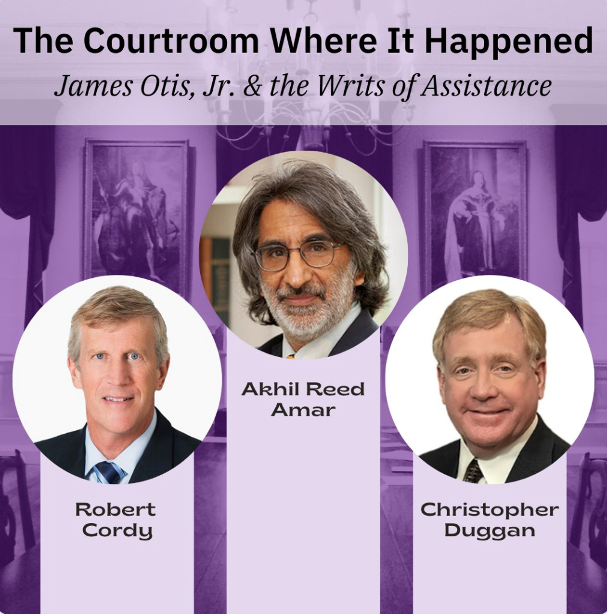
In 1761, attorney James Otis, Jr. delivered a passionate defense in the Writs of Assistance case, laying the groundwork for fundamental democratic principles that continue to shape our lives today.
Many trace the spark that lit the American Revolution to a courtroom in 1761, when Otis transformed his arguments in a search-and-seizure case into a fiery and wide-ranging five-hour oration that laid down many concepts foundational to our democracy.
Otis’s 18th-century arguments continue to shape various aspects of our 21st-century lives, including topics like taxation without representation and rights against search and seizure.
A June 17th program reflected on Otis’s passionate defense in the Writs of Assistance case, laying the groundwork for fundamental democratic principles that continue to shape our lives today. The program also focused on the vital role that lawyers play in sustaining the rule of law that underpins healthy democracies.
Insightful commentary from several legal luminaries delved into the legal, political, and personal drama surrounding this landmark case.
Christopher Duggan, one of the most accomplished trial and appellate lawyers in the United States and the leading force behind the James Otis Lecture Series of the Massachusetts Chapter of The American Board of Trial Advocates participated.
Other panelists included Akhil Reed Amar, the Sterling Professor of Law and Political Science at Yale University, where he teaches constitutional law at both Yale College and Yale Law School, and former Associate Supreme Judicial Court Justice Robert Cordy, who has worked with judges around the world on issues relating to judicial ethics, rule of law principles, and the American judicial system.
For the event at the Old State House Meeting House, the Council Chamber was set up as it would have been when Otis originally argued the original Writs of Assistance case. This free program was made possible by the generous support of The Lowell Institute.
Federal law impliedly preempts state law claim that drug manufacturer should have warned of animal studies and possible link to birth defects.
In re: Zofran (Ondanestron) Prods. Liab. Litig., 57 F.4th 327 (1st Cir. 2023)
The First Circuit Court of Appeals affirmed the district court's grant of summary judgment for a drug manufacturer where the MDL plaintiffs claimed that the manufacturer should have warned prescribing doctors and pregnant women of a possible link to birth defects.
The district court held that the claim was preempted because federal law prohibited plaintiffs' proposed drug label changes and the First Circuit affirmed. The women took the drug off-label to treat pregnancy - related nausea and vomiting.
Applying recent Supreme Court precedent, Merck Sharp & Dohme Corp. v. Albrecht, 139 S. Ct. 1668, 1672 (2019), the First Circuit held that the plaintiffs' proposed warning, that "animal studies showed harm to the fetus when Zofran was ingested during pregnancy," was preempted because compliance with both plaintiffs' proposed drug label changes and with federal law was impossible, and that the manufacturer had satisfied the necessary elements of its preemption affirmative defense as a matter of law.
The First Circuit rejected plaintiffs' argument that the manufacturer could have invoked the FDA's Changes Being Effected ("CBE") procedure, which allows manufacturers unilaterally to amend an FDA-approved label and to seek after-the-fact approval for the change from the FDA. The CBE procedure is one of four pathways for the drug manufacturer, citizens, or the FDA itself to make changes to a drug's label.
Manufacturers may use the CBE procedure "to reflect newly acquired information." The plaintiffs argued that three Japanese animal studies, which the manufacturer did not originally submit to the FDA as part of the new drug approval process, were sufficient "newly acquired information." The First Circuit held that the three animal studies were not "newly acquired" as a matter of law because the studies were not meaningfully different than other studies which the manufacturer submitted as part of the drug approval process. The three animal studies did not meet the definition of "newly acquired information," which is information that "reveal[s] risks of a different type or greater severity or frequency than previously included in submissions to FDA."
The First Circuit found unpersuasive the opinion of plaintiffs’ regulatory expert, a former FDA official, that the Japanese animal studies constituted newly acquired information. The court noted that the expert's opinion is "likely inadmissible" because the question of whether the studies constitute newly acquired information is a question of law and expert testimony on questions of law "is rarely admissible." Thus, the court concluded that there was insufficient evidence of newly acquired information to justify invoking the CBE procedure.
The First Circuit further held that even if the non-disclosed animal studies constituted "newly acquired information" based on which the manufacture could have invoked the CBE procedure, the FDA would have rejected plaintiffs' proposed change. Applying Albrecht, the First Circuit found that there was "clear evidence" that the FDA would have rejected the proposed changes because in 2021, after the three Japanese animal studies had been disclosed to the FDA, the FDA approved a revised label on the drug that stated that animal data revealed "no significant effect . . . on the maternal animals or the development of the offspring."
The court reasoned that "when the FDA formally approves a label stating one thing with full and obvious notice of the directly contrary position, one can read the approval as rejecting the contrary position." Therefore, there was clear evidence that the FDA would have rejected plaintiffs' proposed warning, and the district court properly awarded summary judgment.
Personal Jurisdiction: "relatedness" prong not satisfied where forum resident plaintiff eats contaminated food out of state but does not become ill from food poisoning until returning home to forum the next day; the relatedness doctrine still has teeth following the U.S. Supreme Court's 2021 Ford Decision
Capello v. Restaurant Depot, LLC, 21-cv-356-SE, 2023 WL 2588110 (D.N.H. Mar. 21, 2023) (appeal pending before First Circuit)
The plaintiff, a New Hampshire resident, purchased and ate a salad from a restaurant in New Jersey. The restaurant prepared the salad using romaine that was distributed by the defendant California corporation. The plaintiff became ill the next day after he returned home to New Hampshire. The defendant distributes romaine products to major New England distributor and grocery stores with knowledge that its products will then be sold in New Hampshire.
The district court dismissed the plaintiff's complaint for lack of personal jurisdiction because the plaintiff could not meet his burden under the relatedness prong of the specific personal jurisdiction analysis.
The district court rejected the plaintiff's argument that he could establish relatedness under the "more relaxed" standard of Ford Motor Co. v. Montana Eighth Judicial Dist. Court, 141 S. Ct. 1017, 1022 (2021). In Ford, the court held that the relatedness doctrine was satisfied because the plaintiffs were forum residents who were injured in the forum, and the defendant served a market for the vehicles in the forum, even though the defendant did not sell the plaintiff's particular vehicles in the forum.
The plaintiff tried unsuccessfully to frame his jurisdictional facts within the framework of Ford, arguing that because of incubation periods, his injury actually occurred in-forum, like the Ford plaintiffs, not in New Jersey where he consumed the salad.
The court rejected that argument, reasoning that "a jurisdictional rule driven by the length of an incubation period would be difficult to employ. It could result in a court concluding that a food-poisoning injury occurred in a state a plaintiff passed through only briefly as he traveled from the location of ingestion to his final destination.
A court could do so only after it received and considered evidence regarding the bacteria's precise incubation period in a particular plaintiff." The court further reasoned that the plaintiff had offered "no legal justification for pinning the injury at the moment of the onset of symptoms rather than at the moment of consumption." An appeal of the decision remains pending before the First Circuit and will be argued December 6, 2023.
Toxic torts: summary judgment granted under admiralty law in asbestos case
McIsaac v. Air & Liquid Sys. Corp., 19010282-NMG, 2023 WL 4409516 (D. Mass. July 7, 2023)
Plaintiff alleged that her decedent was exposed to asbestos during his Navy service. The district court granted summary judgment for the defendant pump manufacturer for lack of sufficient product identification under admiralty law.
The plaintiff's decedent died before being deposed, and the plaintiff's product identification evidence consisted of records demonstrating that the defendant's pumps were present on two ships that the plaintiff's decedent worked on, and the testimony of one of the decedent's former co-workers.
The co-worker testified that he worked with the plaintiff's decedent on one or both ships, but that he could not recall the brand name or manufacturer of the pumps that they worked on together.
Applying maritime law, the district court ruled that the plaintiff had failed to proffer sufficient facts to show that the decedent had a "high enough level of exposure" to the defendant's products to show that they were a substantial factor in causing his mesothelioma; the mere fact that the defendant's products were present somewhere at the place of work was not enough.
PFAS: denial of motion to dismiss failure to warn and strict products liability claims against paper mill suppliers
Higgins v. Huhtamaki, Inc., 1:21-cv-00369-JCN, 2023 WL 6516538 (D. Me. Oct. 5, 2023)
The Maine plaintiffs alleged that their groundwater wells were contaminated with PFAS by a paper mill operator and three chemical companies that supplied chemicals to the paper mill. The supplier defendants' motion to dismiss was denied. The district court ruled that the plaintiffs had sufficiently alleged that the supplier defendants had a duty to warn the paper mill of the risks associated with PFAS, and that their injury was proximately caused by the failure to warn.
The district court rejected the supplier defendants’ argument that the learned intermediary/sophisticated user doctrine barred plaintiffs' failure to warn claim because the plaintiffs could plead in the alternative that both the paper mill and the suppliers had a duty to warn and knew or should have known of the dangers of releasing residuals containing PFAS.
The district court also rejected the defendants' argument that disposal of a product is not an intended use, noting that the defendants had cited no Maine case applying the intended use element, and that Maine law only required that "a plaintiff might reasonably have been expected to use, consume, or be affected by the product, which would cove foreseeable uses rather than limiting liability only to those uses that the manufacturer intended."
December 31, 2023
Smith Duggan Cornell & Gollub LLP is pleased to announce that James E. Clancy IV has been named a partner of the firm.
Jim specializes in real estate, probate and estate planning, and corporate law.
In the area of commercial real estate, he advises clients on land use issues and in acquiring, selling, financing, and leasing real estate.
In probate and estate planning, he addresses all aspects of estate administration, including probate and trust litigation, the sale and transfer of property, and the accounting and disbursement of assets. He also advises clients on managing, preserving, and ultimately distributing their assets through effective estate planning.
In the area of corporate law, Jim regularly assists clients in forming and structuring their appropriate legal entities. He also reviews and negotiates contracts in matters related to their daily operations.
Jim is an elected town meeting representative for Chelmsford and is a finance committee member for that community, having served as the chair since 2016.
He practiced for six years with Smith Duggan Buell & Rufo LLP before the firm combined with Cornell & Gollub to form Smith Duggan Cornell & Gollub LLP last year.
Jim received his BA from Boston College and his JD from New England Law | Boston. He is admitted in Massachusetts and New Hampshire.